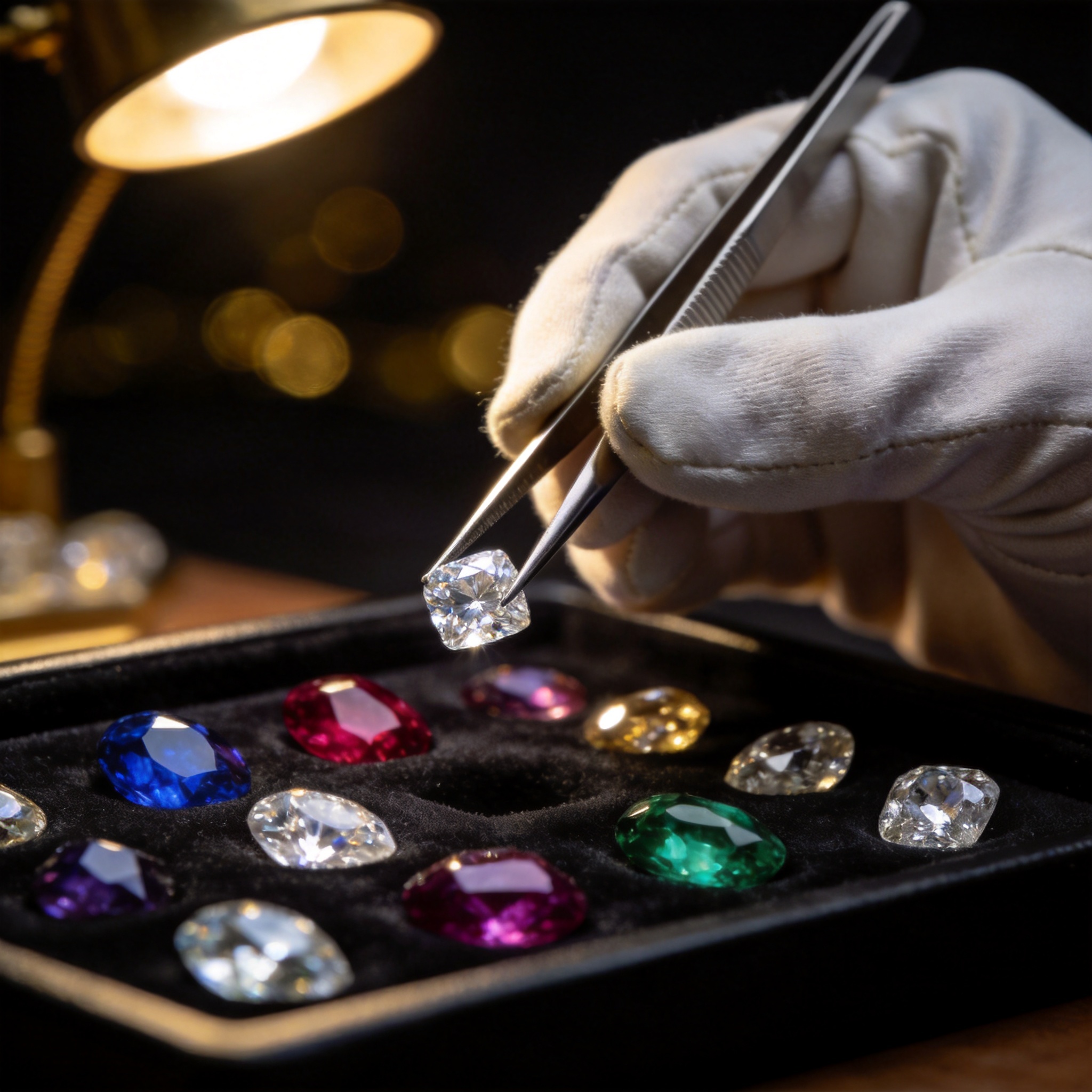
Birthstones are the oldest form of personalized jewelry: a stone assigned to the month of your birth, worn as identity, talisman and gift all at once. They are also one of the smartest starting points for a custom piece — meaningful by default, available at every budget, and endlessly combinable for family jewelry.
But birthstones differ enormously in hardness and durability, and that difference should shape your design. This guide covers all twelve months, what each stone can handle, and how to design birthstone jewelry that survives daily wear.
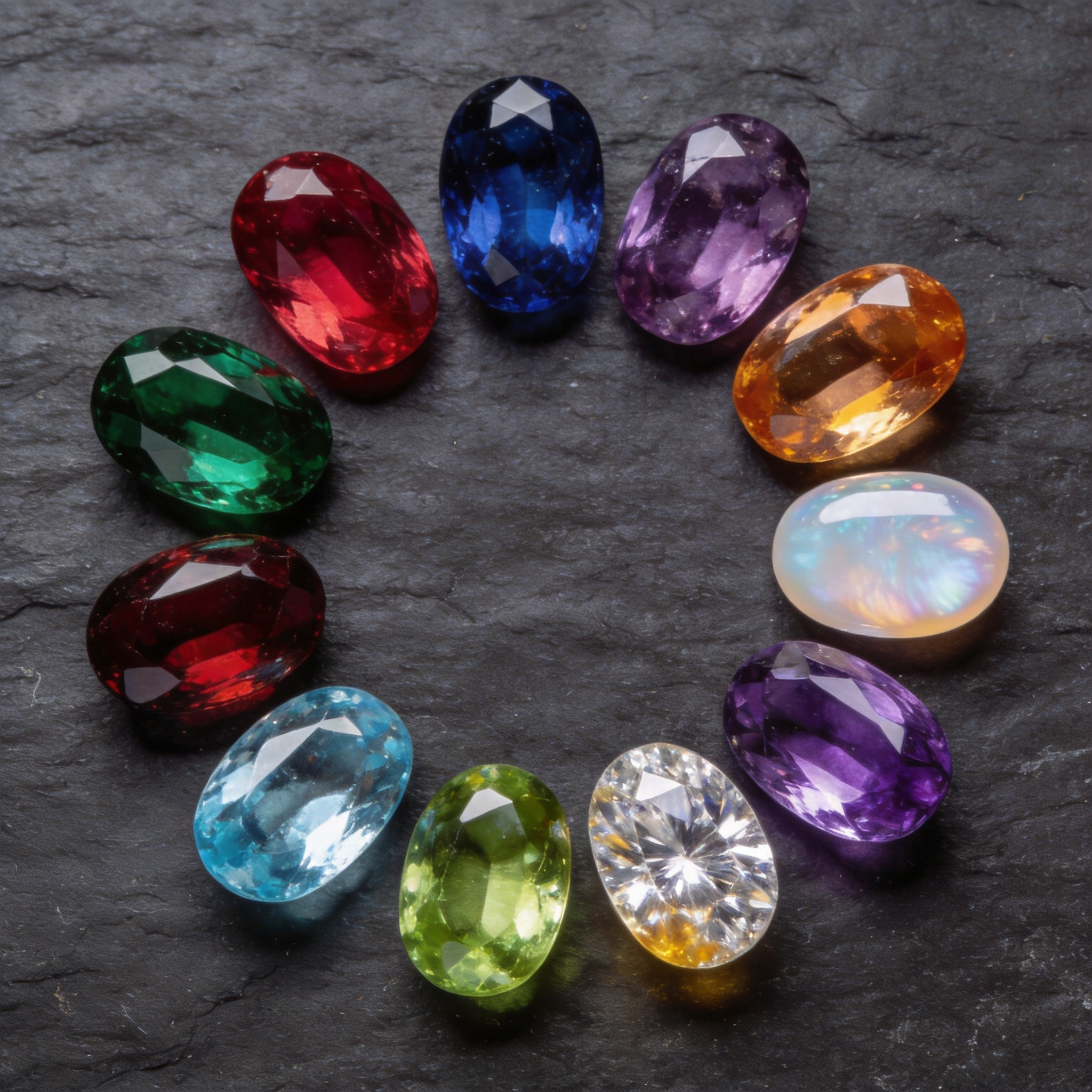
The birthstone chart, month by month
- January — Garnet: deep red, good durability, excellent value.
- February — Amethyst: violet quartz; beautiful but treat gently in rings.
- March — Aquamarine: ocean blue, durable and brilliant, ideal for rings.
- April — Diamond: the hardest gemstone; natural and lab-grown both excel daily.
- May — Emerald: incomparable green; naturally included, needs protective settings.
- June — Pearl or Alexandrite: pearls are soft and need care; alexandrite changes color.
- July — Ruby: corundum hardness, the finest red in jewelry, superb for daily wear.
- August — Peridot: fresh lime green; best in pendants and earrings.
- September — Sapphire: nearly as hard as diamond, in every color but red.
- October — Opal or Tourmaline: opals are delicate and love bezels; tourmaline is sturdier.
- November — Citrine or Topaz: warm golds and blues at friendly prices.
- December — Tanzanite, Turquoise or Blue Zircon: vivid blues, each with its own care needs.
Why durability matters more than meaning
A ring is knocked against door frames and countertops hundreds of times a week. Stones below 7 on the Mohs scale — opal, pearl, turquoise, tanzanite — scratch and chip under that life. The solution is not to avoid them but to design around them: protective bezel settings, recessed seats, or moving soft stones to necklaces and earrings where impact is rare. A good designer asks how the piece will be worn before agreeing where a stone should live.
Natural vs. lab-grown birthstones
Lab-grown sapphires, rubies, emeralds and diamonds are chemically identical to mined stones — same hardness, same brilliance — at a fraction of the price. For birthstone jewelry, that often means choosing a finer, larger, cleaner stone within the same budget. Natural stones carry rarity and resale value; lab-grown stones carry size and perfection. Neither is a compromise; they are simply different priorities, and a certificate tells you exactly what you own either way.
Custom birthstone jewelry ideas that work
- A mother’s necklace: one birthstone per child, set along a bar or around a pendant.
- A family ring: the couple’s stones flanking their children’s in a single band.
- Stacking birthstone bands: add a ring for each new child or grandchild over the years.
- A birthstone halo: a diamond center circled by the wearer’s birth month stone.
- Hidden birthstones: a small stone set inside the band — private, and safe from knocks.
Design yours around the people it honors
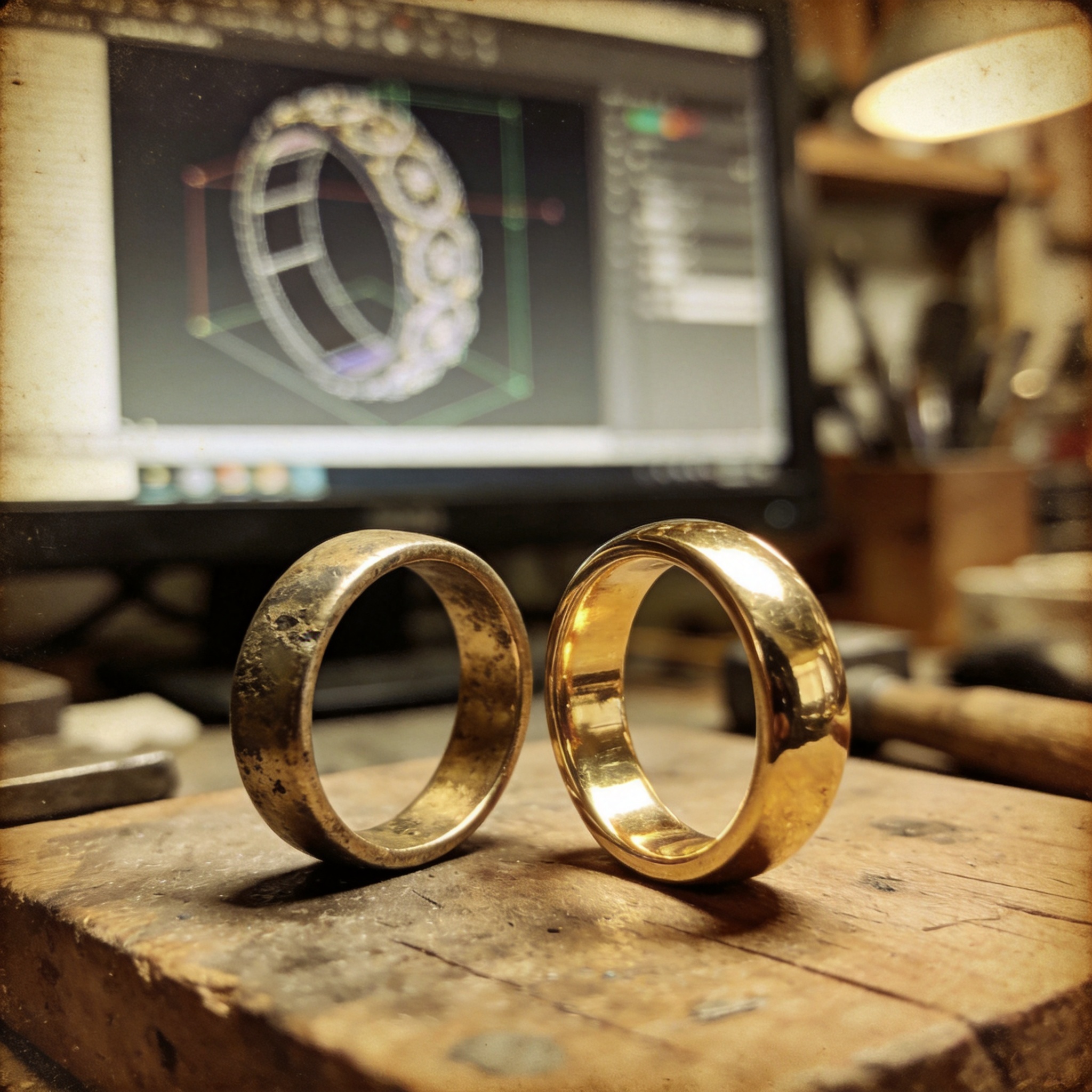
The best birthstone pieces start with a list of names and months, not a catalog. Bring us yours — we will map the stones to a design that fits their durability, source each gem (including custom-cut shapes and sizes), and show you the exact piece in 3D before it is made.

Written by
Lisa M.
Lead Jewelry Designer · 25+ years at the bench. Lisa has designed custom pieces for clients in 60+ countries, from single-name necklaces to heirloom redesigns.